Tampa vs St Pete Homes: Which Side Fits Your Life?
June 11, 2026
June 11, 2026
Choosing between Tampa and St. Pete is not just about picking a dot on the map. You are really choosing the kind of daily life you want, from your commute and housing options to the places you will spend your weekends. If you are weighing both sides of the bay, this guide will help you compare the facts and sort out which city fits your goals best. Let’s dive in.
Tampa and St. Petersburg share the same region, but they live very differently day to day. Tampa is the larger city, with an estimated population of 413,554 spread across 114.02 square miles. St. Petersburg is smaller at 264,033 people across 61.82 square miles.
Even with its smaller footprint, St. Pete is more dense. Census data shows Tampa at 3,376.4 people per square mile and St. Petersburg at 4,178.7 people per square mile. That difference can shape how each city feels when you are out running errands, exploring downtown, or choosing a neighborhood.
Tampa also has more total housing units, with 194,129 compared with 141,689 in St. Petersburg. If you want a broader pool of homes to consider, Tampa starts with a larger housing base. If you are drawn to a more compact city feel, St. Pete may stand out.
One of the clearest differences between these two cities is homeownership. Census data shows an owner-occupied housing rate of 50.3% in Tampa and 62.8% in St. Petersburg. In simple terms, St. Pete has a higher share of homes occupied by their owners, while Tampa has a larger renter presence.
That does not mean one city is all condos and the other is all single-family homes. Public data shows both cities still lean toward single-unit housing, with about 57% in Tampa and 58% in St. Petersburg. The bigger distinction is not the structure type alone, but the neighborhood mix and overall feel.
For you as a buyer, that can matter a lot. If you want areas that feel more owner-occupied and residential in character, St. Pete may line up with that preference. If you want more variety across submarkets and a larger overall inventory base, Tampa may give you more options to compare.
On paper, commute times are close. The average commute is 24.8 minutes in Tampa and 25.6 minutes in St. Petersburg. That means your actual experience may depend less on the city name and more on where you work, where you live, and whether you cross the bay often.
For many buyers, the Howard Frankland Bridge is the real story. The Florida Department of Transportation says the replacement bridge opened to traffic in March 2025, increased capacity by 50%, and reduced congestion for 200,000 daily travelers in the Tampa Bay and St. Petersburg areas. If your job, family, or routine takes you back and forth, that matters.
Both cities also offer downtown circulators, but they work best for short local trips. Tampa’s historic streetcar runs along a 2.7-mile route linking downtown Tampa, Channelside, and Ybor City. St. Pete’s Downtown Looper is free, runs seven days a week, and arrives every 15 to 20 minutes around downtown destinations.
If you want a bigger-city mix of activities, Tampa brings a broader urban package. The Tampa Riverwalk stretches 2.5 miles and connects five parks, giving you a central spine for walking, biking, and waterfront time. The city also highlights 178 parks and more than 300 miles of multi-purpose trails.
Tampa’s amenity list is deep. City materials point to Busch Gardens Tampa Bay, the Florida Aquarium, ZooTampa, the Straz Center, the Tampa Museum of Art, the Tampa Bay History Center, and the Glazer Children’s Museum. If you like having a wide range of attractions, events, and recreation close at hand, Tampa gives you more of that all in one place.
Sports and major events are also a big part of Tampa’s identity. The city calls out teams like the Buccaneers and Lightning, along with well-known traditions such as Gasparilla. If your ideal home base includes a steady calendar of games, festivals, and downtown activity, Tampa has a strong case.
Ybor City gives Tampa a distinct historic and cultural layer. Visit Tampa Bay describes it as the place where Tampa Bay’s historical and cultural roots lie, with cigar-factory architecture and long-standing local landmarks. It is also home to Columbia Restaurant, identified as the oldest restaurant in Florida.
For buyers who want access to a district with a different texture than the modern downtown core, Ybor is worth noting. The TECO Line Streetcar offers a free ride into Ybor from just over a mile away in downtown Tampa. That connection adds convenience to one of the area’s most recognizable destinations.
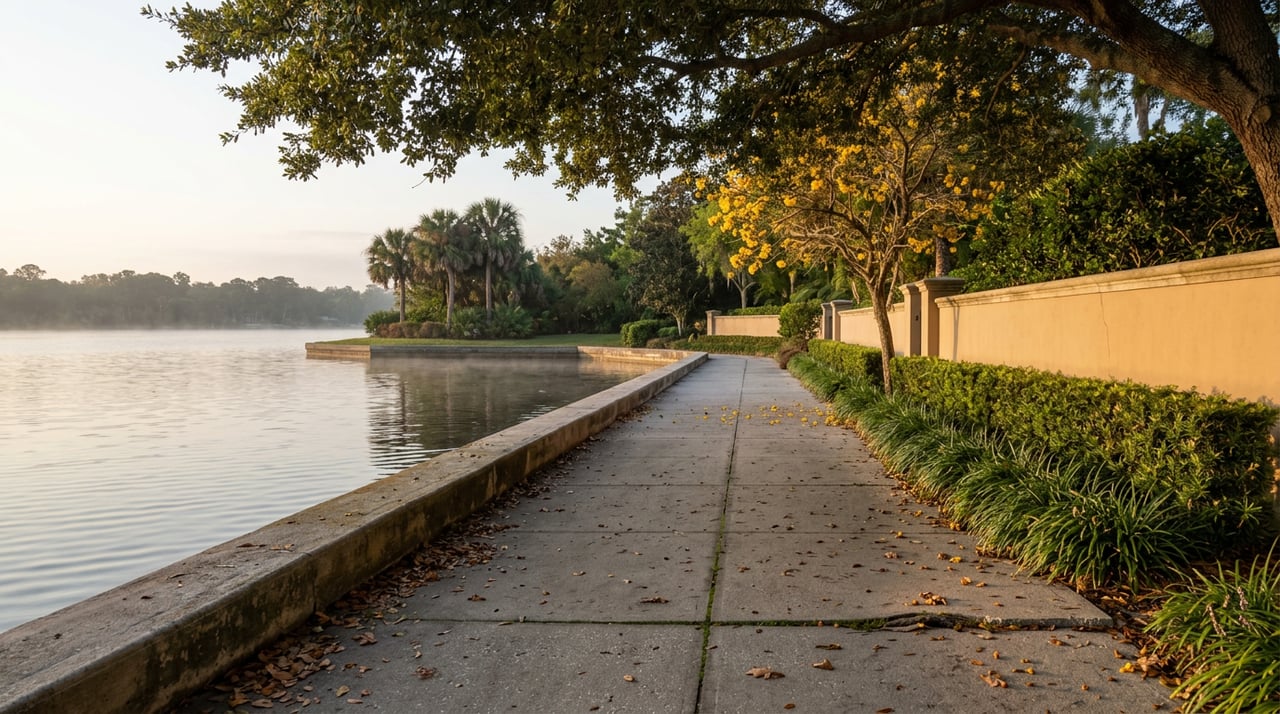
If your ideal day includes bay views, a walkable downtown, and easy access to the beach lifestyle, St. Pete often feels like the better fit. The St. Pete Pier spans 26 acres and is designed for strolling, biking, dining, shopping, swimming, and concerts. It is one of the city’s signature gathering places.
The downtown waterfront park system is another major draw. Public information highlights a chain of bayfront spaces that includes Vinoy Park, North Straub Park, South Straub Park, North Shore Park, and Lassing Park. That steady access to open water and public green space shapes everyday life in a very visible way.
St. Pete also leans heavily into arts and culture. Local visitor information regularly spotlights the Salvador Dalí Museum, the Museum of Fine Arts, the Chihuly Collection, and Sunken Gardens. If you want a city where waterfront living and cultural attractions sit close together, St. Pete checks that box.
For many buyers, beach access is a deciding factor. Local tourism information says downtown St. Pete is about 12 miles east of St. Pete Beach. That proximity makes it easier to blend downtown living with regular beach time.
This is one reason so many relocators and move-up buyers look closely at St. Petersburg and nearby coastal communities. You can enjoy an active downtown environment while staying connected to the shoreline lifestyle that defines so much of this side of Tampa Bay.
If you are comparing the market itself, current snapshot data shows Tampa with slightly higher pricing and more homes for sale. Zillow reports a typical home value of $376,530 in Tampa, down 3.1% year over year, with homes going pending in about 30 days and 3,016 homes for sale. The same snapshot shows a median sale price of $391,667.
In St. Petersburg, Zillow shows a typical home value of $352,315, down 5.6% year over year, with homes going pending in about 36 days and 2,668 homes for sale. The same data puts the median sale price at $371,833. These numbers suggest Tampa currently has the larger inventory base, while St. Pete remains a bit lower on typical value and median sale price in this snapshot.
That said, numbers alone do not choose your home base for you. A slightly larger inventory pool in Tampa may help if you want more choices. St. Pete’s pricing and owner-occupied profile may appeal if you are focused on lifestyle fit and neighborhood feel.
For many buyers, the right answer comes down to how you want your week to function. Tampa tends to fit buyers who want a larger housing base, a slight commute edge, and a broad concentration of urban amenities. St. Pete tends to fit buyers who prioritize waterfront parks, arts, downtown walkability, and easier access to the beach lifestyle.
Here is a simple way to think about it:
On paper, Tampa and St. Pete can look close. In real life, your experience will depend on the neighborhood, your commute pattern, the type of home you want, and how you spend your time outside work. That is where local insight becomes far more useful than broad assumptions.
If you are torn between the two, it helps to compare not just prices and square miles, but also the daily rhythm of each place. A boutique team with real local knowledge can help you narrow in on the right fit, whether you are relocating, moving up, or looking for a lifestyle-driven purchase near the coast.
If you are weighing Tampa against St. Pete and want clear, local guidance tailored to your goals, Jason White can help you compare neighborhoods, lifestyle fit, and market opportunities across Tampa Bay.
Stay up to date on the latest real estate trends.
Embark on your next real estate journey with W Real Estate Group. Contact us today and let us turn your real estate dreams into reality. With W Real Estate Group, your success is our priority. Welcome home to a future of exceptional real estate experiences!